13.7.17

The Highline...

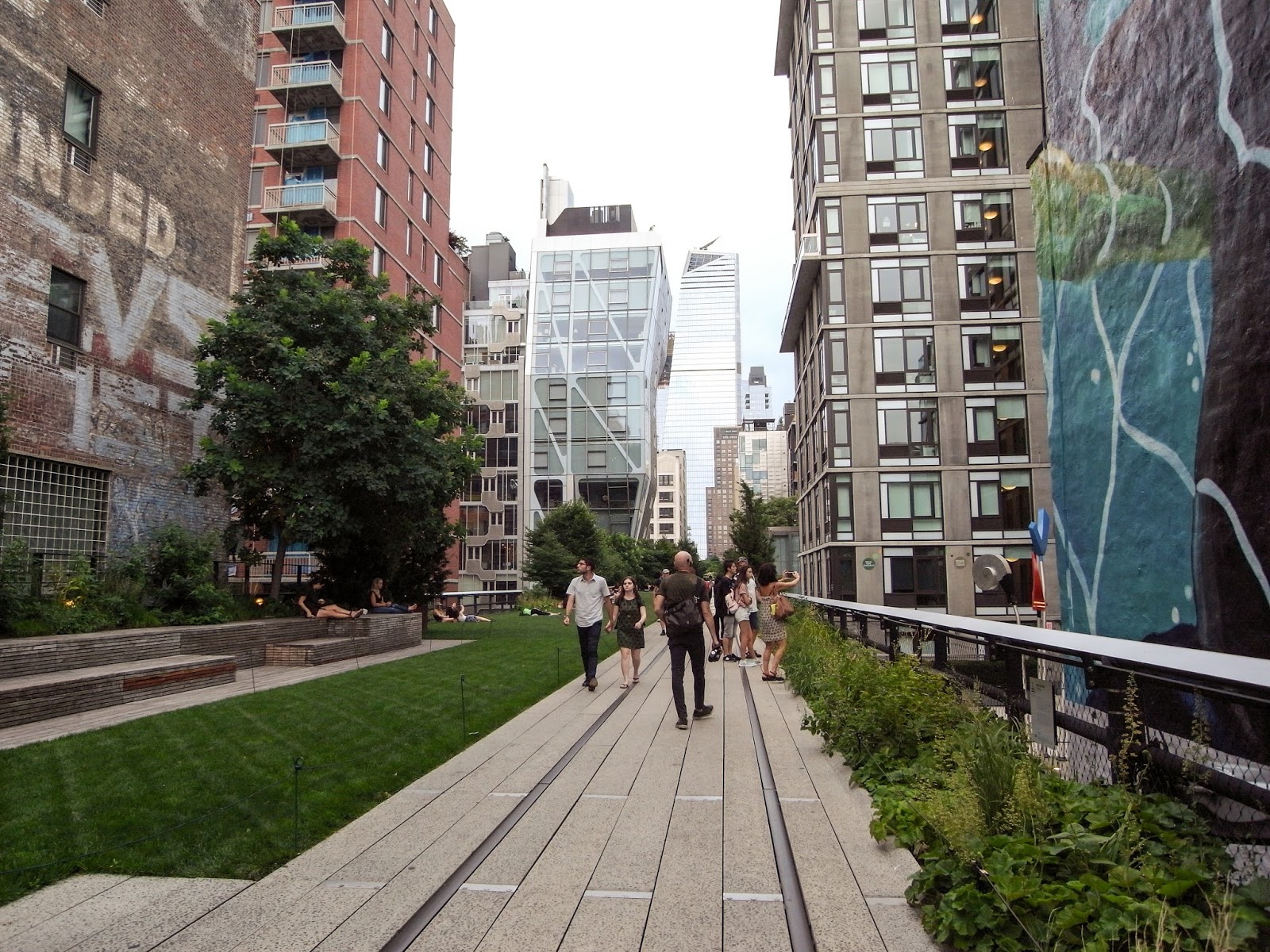
..really is magnificent.

Given how readily this narrow elevated park is referenced as an aspirational example of landscaping within developments of almost any scale, it is easy to forget the project's community driven origin (a fact also belied by the quality of execution).


The site of the park, an abandoned former elevated railway line in south west Manhattan, had been slated for demolition by Mayor Giuliani in the late 90s. But the Mayor underestimated the significance of this local landmark, and its threatened removal led to a citizen led campaign, supported in particular by the gay community of the West Village, to turn the disused piece of infrastructure into a public amenity.
Early on, the campaign initiated a design competition as a means of visioning and of galvanising support. It proved a successful approach and the park was eventually delivered under Mayor Bloomberg late 2000, its extension just a few years later up into Hudsons Yards in 2014 is testament to the fact its popularity has completely outstripped all expectation.

Compression...

..and release..


Spaces within spaces

It's easy to see the appeal, it is lush, it is calm, it is above the traffic; no endless waiting at street crossings. Though it is long and linear, the planting and canny layering of closed and open views, of compression and release and the sense of spaces within spaces, is so carefully calibrated as to continuously lead you gently on without monotony


I would go everyday if I could.

10.7.17

City Parks

I made a whistle stop tour of a few Manhattan parks created by developers in return for additional floor area. That system works well in areas of the city that are attractive to big money, which is why the NYC DOT Plaza Program is so heavily in favour of siting new spaces in lower income areas where developers aren't falling over themselves.

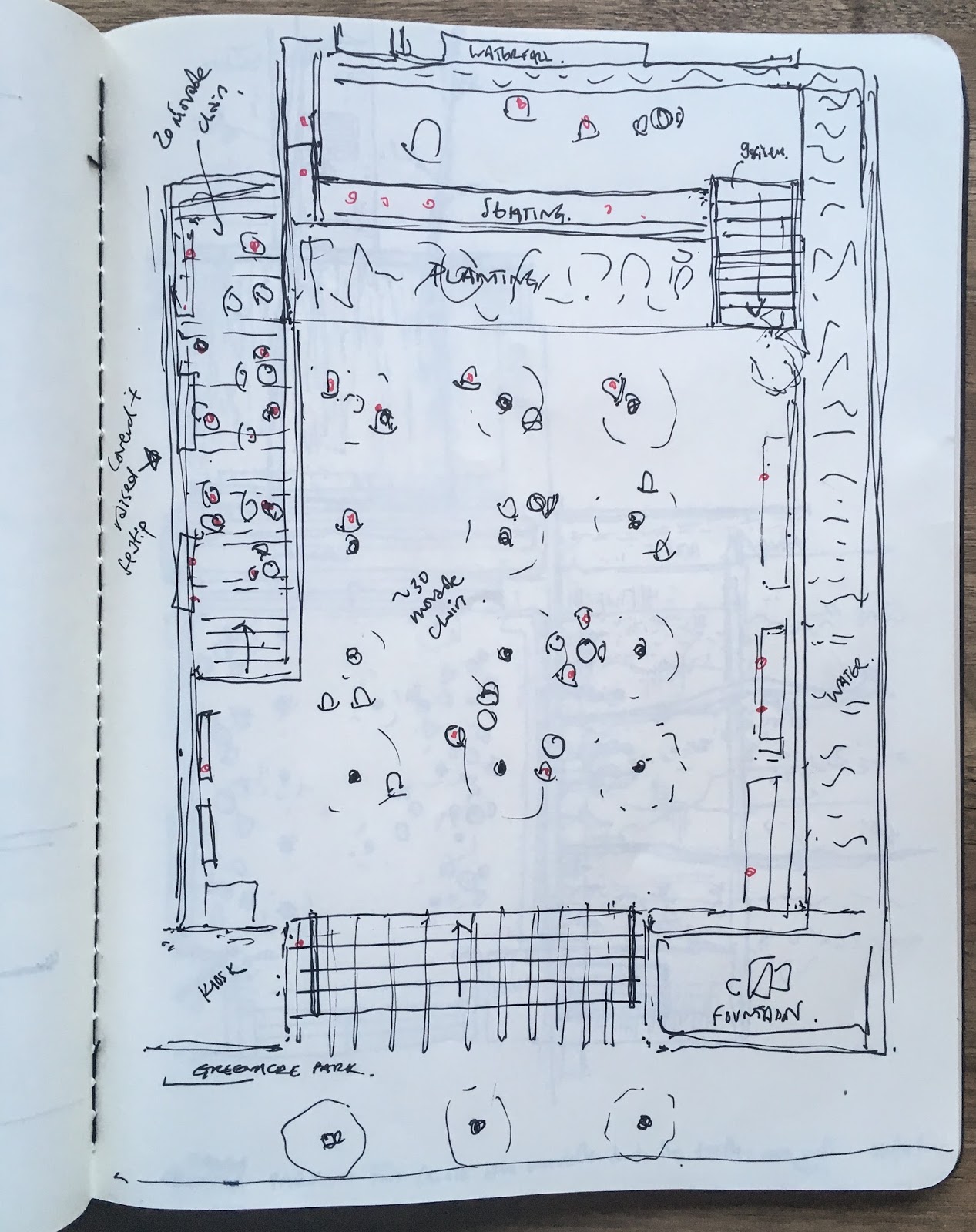
Greenacre Park

I was in Manhattan late afternoon, well after what I assumed would be the busiest time for these spaces - lunchtime. They were still all well occupied and not, as one might assume, exclusively by office workers. I noted the number of elderly people, and the number of people reading.


Clearly then, these spaces are not community driven or bottom up, but they inspire approaches to design (all the ones I visited had a water feature, which as well as providing visual interest, drown out traffic noise substantially) and demonstrate well that the size of an amenity is not proportional to its use or value.

Paley Park

6.7.17

Interference Archive

And a well spent afternoon over at the Interference Archive, a completely volunteer run resource, gallery and venue, that recognises the link between cultural production and social movements. Books, zines, posters, banners, leaflets, stickers, badges and more act as record and display, there to be pored over at leisure by any interested person from the shelves, boxes, drawers, and erm, clothes lines.


Daniel gave me a little tour of the collection, showing me some of the rarer pieces such as original copies of Black Panther Magazine; I’ve read the latest Tate exhibition ‘Soul of a Nation’ has copies of the same, though I very much doubt I'd be able to handle those as I was these...


By way of thanks I offered up some copies of my ‘zine ROMP, I was delighted to hear they’d go into the collection.

The Lot

On a drizzly morning I made my way over to The Lot Radio, which, as the name, and logo, makes clear, is a (digital) radio operating out of a formerly disused lot. This was actually my second visit, having stopped by for the 4th July block party a few nights before, a fun night, but it was good to see the radio in its quieter, workaday mode.

4th July block party at the Lot Radio
In what remains an industrial part of the Brooklyn, the little triangular plot housing the radio was the site of a gas station after the war. By the 60s it was unused, standing as a ruin until the mid 90s when the City demolished the structure and sold the site on the cheap.

The radio has been operating out of the space for a year now. I met with owner Francois Vaxelaire who used to live nearby and had had his eye on the gated lot for some time, feeling - with the rest of the neighbourhood - the sense of an opportunity missed.

A small hand written ‘For Lease’ sign posted in April 2015 was enough to ignite the idea of a digital radio, something US-based to rival Red Light Radio in Amsterdam or NTS in London, and Francois took on a labyrinthine, bureaucratic process to realise the ambition. Given the opaqueness of that ill-defined process, it seems a significant part of the success of the radio is down to Francois’ simple persistence, and having learned through the experience, he is now involved with a small business task force; an attempt to create a little more transparency for others.

One issue in securing the lease was identifying the municipal authorities that had to be engaged (many, it transpired) given the proposed use was not so easily categorised. The other was formally defining the architecture of digital broadcasting. Since the lease couldn't be applied to an activity, only a building, it now operates out of repurposed container which overreaches its functional requirements to meet the stringent regulations of a habitable structure.


Half of the container houses the radio while the other accommodates a cafe that crucially generates enough income for the enterprise to be self supporting. During the time I spoke with Francois, people dropped by, got a coffee, sat down and hung out.


I wondered if there were any fears that the success of the radio might be its undoing, unwittingly becoming a meanwhile space by increasing the profile and value of the site, but it seems any future developer would be quite constrained by the industrial zoning laws and the need to remediate the site. Beyond this, there is also the way the project - with its aims to be ‘neighbourhood friendly; a radio, not a spectacle’ - has become a community asset, developing for example a symbiotic relationship with the adjacent church which regularly stages Lot events.


Later we take a walk to a nearby new hotel development with a landscaped park on its roof. This space has its legacy in planning measures that allow developers to offset additional floor area against the provision of public space. The spaces are meant to be signposted as publicly accessible, but this one isn't, in fact, its entry up a stair at a point furthest from the street seems decidedly private, and even once up, it has a hushed, corporate feel. The Lot, meanwhile, is open on all sides.

5.7.17

'People tend to sit where there are places to sit'

The same afternoon I met with Priti Patel, Senior Design Associate at Project for Public Spaces, an organisation created directly out of the pioneering public realm work of William H Whyte (as quoted in the title of this post). I learnt about their vital role as facilitators between the top down and bottom up in public realm work; PPS always work with a local partner for example regardless of the commissioning client. Following on from my conversation with Andrew Ronan at DOT I learned more too about the importance of programming a space to bring people there intentionally and encourage change in perception, from my experience there seems to be less critical focus on this element in London.

A nice bonus to the conversation was the opportunity to pick up a glaring omission from my personal library.


And while I don't have a time lapse camera to set up in an elevated spot, I like to think Whyte would approve of my observer’s kit bag...

NYC DOT

I spent the 4th of July walking around Brooklyn, gaining my bearings, sketching, sound recording and adjusting to the heat before celebrating at a block party.

The 5th thus, began in earnest scholarship mode with a visit to the Department of Transportation in Lower Manhattan; a tall Manhattan-esqe building complete with vast foyer, bag scanning, marble finishes and banks of elevators.


I was there to meet Andrew Ronan of DOT to discuss the NYC Plaza Program; a framework for community organisations to partner with the DOT in order to transform underused streets into neighbourhood public spaces.

Note taking furiously for an hour I learned how the Program came into being, what work goes into making an active plaza, some of the spaces that have been created, how the application process works, the practicalities of the partnership and its current ambitions given it is nearly a decade old.

Originating in the Bloomberg administration’s 2007 PlaNYC economic and sustainability plan - which included the ambition that all New Yorkers live within a 10 minute walking vicinity of quality open space - the Program was launched just a year later and continues in place under the current Mayor, Bill de Blasio. Since then, 73 new plazas have been or are in the process of being created (52 are open to the public) with priority weighted towards neighbourhoods that lack open space.


Plaza priority areas in the 5 boroughs - Source NYC DOT

In order to enter the competitive application process, a community organisation needs to be formalised within certain criteria - a necessary measure since they will be committed to managing, maintaining and programming the space for 9 years in exchange for DOT closing a segment of the street then funding the design and construction of the space. Such groups will generally have already expressed an interest in creating a neighbourhood amenity, and might be steered toward the Plazas Program such that, as Andrew explained, the receipt of their application is anticipated.

Beyond the contractual obligation, the community group becomes the face of that intervention which can be crucial in avoiding the pernicious charge of city sponsored gentrification (the new plazas are identifiable across NYC by their bonded gravel, granite bollards and coloured chairs). To that end, all projects within the Program begin with a minimum of 2 public consultations, one of which might form a kind of 1 day representation of what the plaza could be.

It is an excellent scheme that seems to work well as a kind of mediator between top down and bottom up with tangible results. It was heartening to learn that in many cases a group might go on to champion other local causes as they galvanise their core, gain in confidence and learn more about how to access relevant municipal assistance. I’m looking forward to visiting some of the completed plazas across the city.

4.7.17

J'arrive

I'm embarking on the first leg of my Winston Churchill Memorial Trust Travel Fellowship - studying community driven public realm in dense cities - in NYC.
And what better day to arrive than the 4th of July

3.7.17

ROMP

Taking its cue from the music zines I bought by the dozen as a teenager in the suburbs, I have finally, painstakingly put together issue one of ROMP.


ROMP is an architectural publication that references culture more broadly - more akin to those DIY zines - than the regular architectural press, presenting the field with a little more irreverence, humour and politics.


ROMP #1 is available now for FREE, either in person or via Royal Mail
- message me your address and I'll drop in it the post.

27.6.17

Palace

Over the past year or so I've been hand developing black and white prints at community darkroom Photo Chats at Chats Palace.  In a pleasing circularity, the images, which are portraits of the local area, will be exhibited in the autumn within the building itself. There's even one of Chats' (in the words of Pevsner) sober stone faced portico with Doric columns.

One of these did not make the cut..

So I spent a couple of hours at Chats Palace today with Peter from the darkroom, editing the set down, pairing them this way and that and deciding on a hanging order. They seem to work together, and lift each other, as a good family should.


2.4.17

Civic-ness

Exactly a year ago I set out on a bright spring morning with the idea of taking pinhole photos of GLC fire stations in Hackney and Tower Hamlets.
How did I get here?
Almost a year before that I’d worked on a proposal for a new technical college on Parnell Road in East London, on the site of Bow Fire Station, which had been closed by Boris Johnson in 2013. I hadn’t known any of this before, and I wasn’t familiar with Parnell Road, but I felt a twinge of sadness when I saw the site photos, the fire station was a twin of Homerton Fire Station near my home, a handsome late 60s low block building, with orderly openings trimmed in black and those distinctive red doors. That fire station lends an unmistakable civic character to the High Street it sits on, enhanced of course by the public library of a similar era a little further along. 
I thought how different the High Street would feel without those buildings, and of the way in which the reduction of public services reduces the civic nature of cities, the backdrop to our lives. Do we become less civic as a consequence?

Homerton High Street: The fire station and adjacent library


I wondered what the loss of the fire station on Parnell Road would do to the character of this - mostly residential - neighbourhood. And then I learned the 60s fire station on Kingsland Road had also been closed and slated for demolition. I wanted to record them before they were gone.

And the pinhole cameras? I hadn’t used them for years, but I had just joined the local community darkroom and thought I’d set myself project. The last images I’d made with them were of the Moorfields Highwalk, which has now been demolished for Crossrail, so they seemed apt as a form.

I made a journey that took me from Homerton High Street, to Stoke Newington High Street, to Kingsland Road, Bethnal Green Road and finally Parnell Road, five humble well proportioned buildings, not exactly the same, but all of a close family. All ascribed to no specific architect but simply GLC Architects; I like that.

Homerton Fire Station
Stoke Newington Fire Station
Kingsland Fire Station
Bethnal Green Fire Station
Bow Fire Station